The most dangerous moment in DeFi is not always the moment a smart contract fails. It may be the moment a user approves a transaction they never fully understood. That counterintuitive point changes how a wallet should be judged. A browser extension is not merely a digital keychain or a convenient login tool; it is an interpretation layer between a person and an automated financial system.
For US-based DeFi users considering a Rabby extension download, the important comparison is therefore not simply “Which wallet has more features?” It is “Which setup helps me identify the right chain, contract, asset, and permission before I sign?” Rabby is positioned around Ethereum and the broader EVM environment—the family of networks that use compatible smart-contract execution. That multi-chain orientation can reduce friction, but it also creates new opportunities for confusion. Convenience and security are related, but they are not the same thing.
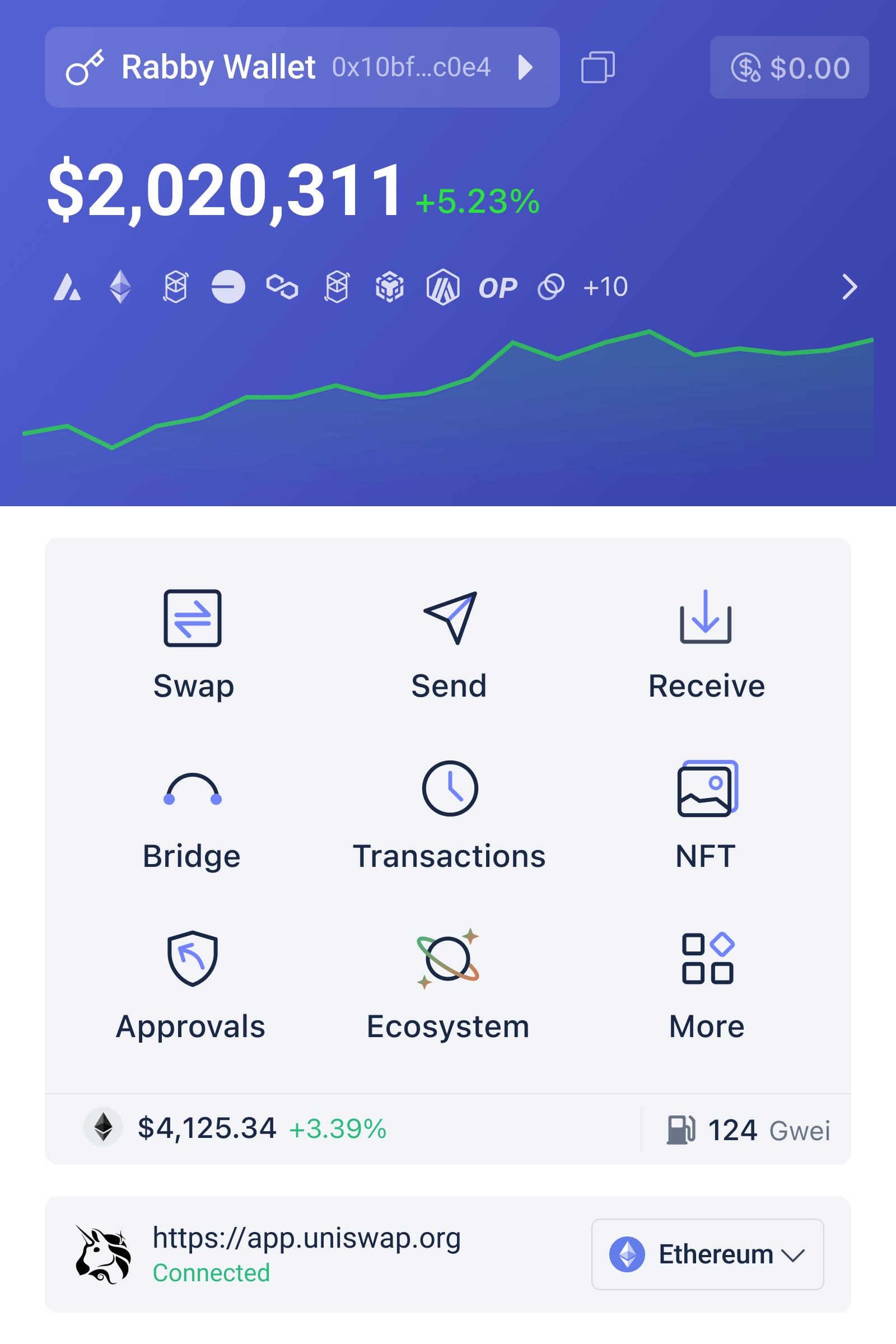
Three wallet approaches, three different risk profiles
A useful way to compare wallets is to separate custody, interface design, and transaction exposure. A browser wallet extension usually keeps the signing process close to the websites a user visits. A hardware wallet isolates key operations in a separate device. A single-chain wallet may offer a simpler mental model because it presents fewer networks and fewer application contexts. None of these categories is automatically safe or unsafe; each shifts where mistakes are most likely to occur.
| Approach | Main advantage | Primary trade-off | Best fit |
|---|---|---|---|
| Multi-chain browser wallet | Fast access to many EVM applications and networks | More context to verify: chain, contract, token, and permission | Active DeFi users who can review transactions carefully |
| Single-chain wallet | Lower cognitive load within one ecosystem | Less flexible when applications span multiple networks | Users focused on one chain or a small set of applications |
| Hardware wallet | Private-key operations are separated from the ordinary browser environment | Extra cost, setup, and signing friction; it does not make bad approvals harmless | Long-term holdings and larger balances |
The table reveals a common misconception: a hardware wallet and a browser extension are not direct substitutes in every situation. A hardware device can improve key isolation, while a browser wallet can improve application access and transaction workflow. Many experienced users use both, assigning different balances and purposes to each. The deeper principle is compartmentalization: the wallet used for experimentation, liquidity provision, or unfamiliar applications need not hold the same assets as the wallet used for long-term savings.
Why multi-chain convenience can increase the need for attention
In an EVM environment, the same wallet address may appear across several networks, but that does not mean the assets or contracts are interchangeable. A user can hold an asset with a familiar name on one chain and encounter a different token contract with the same or similar name elsewhere. Network selection, bridge routes, token contracts, and gas assets all become part of the security decision.
This is where a multi-chain wallet can be useful. A wallet designed for Ethereum and EVM networks can present a more unified way to move among applications instead of requiring a separate workflow for every ecosystem. Recent project messaging has emphasized Rabby as a wallet for Ethereum and EVM chains, with access through browsers such as Chrome and Brave. That positioning is relevant to DeFi users because many protocols are distributed across networks rather than confined to one chain.
Yet a unified interface should not be mistaken for unified risk. The wallet may make different networks easier to reach, but the underlying contracts retain their own code, permissions, economic incentives, and failure modes. A lending protocol, decentralized exchange, bridge, and yield strategy can all appear in the same browser session while presenting very different risks. The interface organizes access; it does not independently validate the entire financial proposition.
Before installing any extension, users should begin with source verification rather than search-engine convenience. Malicious copies of popular wallet extensions can imitate names, logos, and download pages. Readers reviewing installation instructions can consult this rabby extension download resource, but they should still verify the publisher, browser listing, permissions, and domain through trusted project channels before entering any recovery phrase. A genuine-looking page is not proof of authenticity.
Myth versus reality in wallet security
Myth: A wallet protects funds simply because it is well known
Reality: security is a chain of conditions. The software must be authentic, the recovery phrase must remain private, the computer and browser must be reasonably secure, and the user must understand what is being signed. A reputable wallet can reduce some classes of error, but it cannot prevent a user from revealing a seed phrase, approving a malicious contract, or sending assets to the wrong address.
Myth: Connecting a wallet is the same as giving away funds
Reality: connection and authorization are distinct events, although users often treat them as one. Connecting may allow a decentralized application to see a public address and request actions. A token approval, by contrast, can grant a contract permission to move a specified asset under defined conditions. The practical lesson is to distinguish visibility from authority. Ask not only, “What am I connecting to?” but also, “What permission am I granting, and how could it later be used?”
Myth: A transaction that displays a familiar token name must be safe
Reality: names and symbols are weak identifiers. Contract addresses, network context, recipient details, and function calls matter more. A deceptive token may copy a familiar label, while a legitimate protocol may require a complex transaction that is difficult for a non-specialist to interpret. This is a boundary of wallet interfaces: they can improve legibility, but they cannot turn arbitrary smart-contract code into a perfectly understandable consumer message.
Myth: Multichain means every chain is equally mature
Reality: EVM compatibility is primarily a technical compatibility layer, not a guarantee of equal security, liquidity, decentralization, or governance quality. A network can support familiar tools while having a smaller validator set, thinner markets, weaker operational history, or more concentrated infrastructure. Users should assess the chain and application separately instead of treating compatibility as a safety certification.
A practical framework for installing and using a wallet
The first stage is authenticity. Download only from a source that can be independently associated with the project, and inspect the browser extension’s publisher information. Avoid sponsored advertisements or unsolicited links when a trusted project channel is available. During setup, create or import a wallet only in the intended application. A recovery phrase should never be typed into a website, form, chat window, or support ticket. Anyone who obtains it can generally control the wallet, regardless of how convincing their explanation sounds.
The second stage is separation. Consider maintaining one wallet for routine DeFi activity and another for assets that are rarely moved. This is not a perfect defense—an unsafe device can still compromise multiple accounts—but it limits the damage from a single bad approval or compromised application. For larger holdings, a hardware wallet may add a meaningful layer of key isolation. The cost is operational: users must manage backups, device access, compatibility, and a more deliberate signing process.
The third stage is transaction review. Before signing, check the selected network, the destination, the asset, the amount, and whether the request is a transfer, swap, contract interaction, or approval. For unfamiliar applications, start with a small amount that would be tolerable to lose. This is not an argument that small transactions are automatically safe; it is a way to limit exposure while learning how an application behaves.
The fourth stage is permission hygiene. Periodically review token approvals and remove permissions that are no longer necessary, especially after using experimental protocols. Revocation itself may require a network fee and is not a substitute for avoiding malicious contracts in the first place. It is better understood as maintenance, like closing unused doors rather than assuming that a locked door makes every room safe.
Finally, preserve operational discipline. Keep the browser and operating system updated, use a strong device passcode, avoid installing unnecessary extensions, and be skeptical of urgent support messages. Phishing often succeeds by compressing the decision window: “verify now,” “claim immediately,” or “fix your wallet.” A short pause is a security control because it creates time to check the domain, transaction details, and source of the request.
What to watch as multi-chain wallets evolve
The likely direction of wallet design is toward better interpretation rather than merely broader network coverage. If wallets can present clearer contract intent, distinguish routine transfers from dangerous permissions, and make network context harder to overlook, they may reduce avoidable errors. That outcome is conditional, however. It depends on the quality of the underlying data, the accuracy of risk detection, and whether users understand that warnings are signals rather than guarantees.
There is also an unresolved tension between simplicity and transparency. A highly simplified interface may help newcomers complete ordinary actions, but it can hide important detail. A highly technical interface may expose more information while overwhelming the reader. The strongest designs will likely offer layered explanation: a concise summary for routine decisions, with contract and permission details available when the situation is unusual or high value.
For DeFi users in the United States, the decision is therefore less about finding a wallet that eliminates risk—a promise no software can credibly make—and more about matching tools to behavior. A multi-chain browser wallet can be a practical gateway to Ethereum and EVM applications. A hardware wallet can strengthen key separation. A dedicated low-balance wallet can contain experimental exposure. Used together, these approaches create a more resilient system than relying on any single product label.
Frequently asked questions
Is Rabby a hardware wallet?
Rabby is generally used as a software wallet interface through a browser extension, not as a standalone hardware device. Users seeking stronger key isolation may connect a compatible hardware wallet, but they still need to review the application, network, and transaction before approving it.
What should I verify before a Rabby extension download?
Verify the source, publisher identity, browser listing, requested permissions, and project domain. Never enter a recovery phrase into a download page or support form. After installation, test with a small balance and confirm that the extension behaves as expected before using larger funds.
Does a multi-chain wallet make DeFi safer?
It can make network and application workflows easier to organize, which may reduce some user errors. It does not guarantee that every supported chain, token, bridge, or smart contract is safe. Multi-chain access improves convenience, but it also increases the number of contexts that must be checked.